

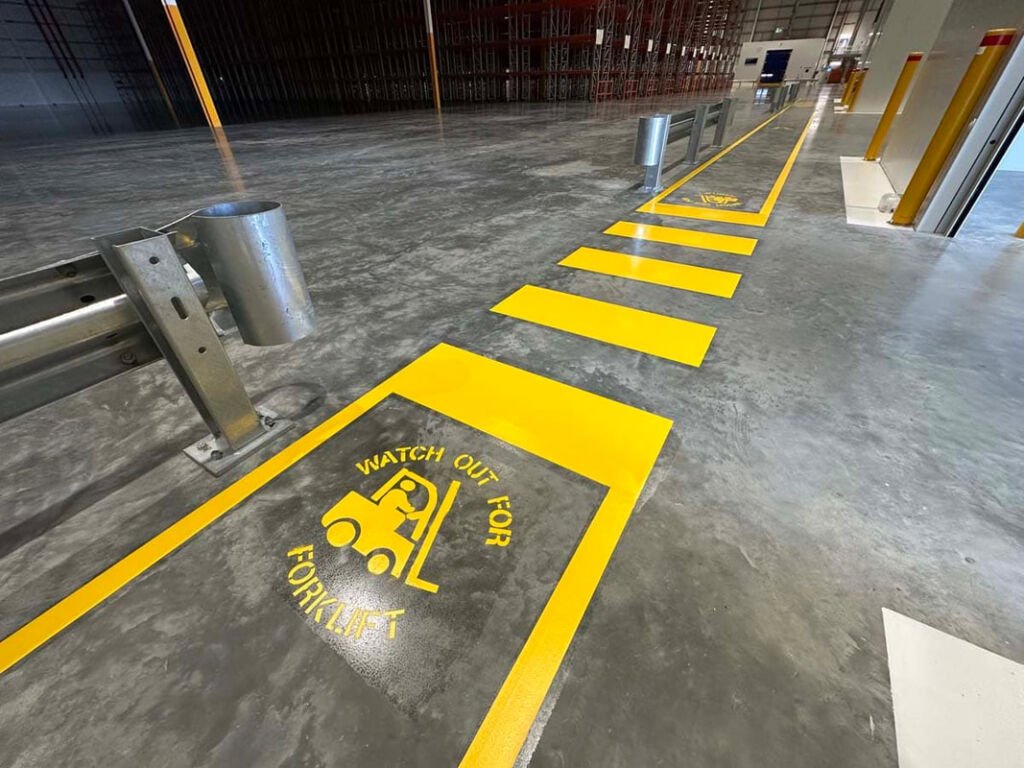
Warehouse and Industrial Floor Markings in Buffalo
Quick Answer
- Truline provides professional warehouse and industrial floor markings in Buffalo to improve safety, organization, and operational efficiency.
- Services include forklift travel lanes, pedestrian walkways, safety zones, loading areas, and custom facility layouts.
- All markings are designed to support OSHA guidelines, facility safety plans, and internal traffic control systems.
- Industrial clients across Sullivan County rely on Truline for durable, clearly defined floor markings built for heavy use.
Clear, durable floor markings are essential inside warehouses, manufacturing plants, and industrial facilities. Truline delivers warehouse and industrial floor marking services in Buffalo that help reduce accidents, improve workflow, and keep operations organized. From forklift traffic lanes to pedestrian safety zones, our markings are built to perform in high traffic industrial environments across Sullivan County.
Table Of Contents
Why Warehouse Floor Markings Matter in Buffalo
In industrial environments, unclear traffic flow leads to accidents, inefficiency, and downtime. Warehouse floor markings provide visual guidance for employees, equipment operators, and visitors. In busy facilities throughout Buffalo, professional markings help separate vehicle traffic from pedestrian areas and support safer daily operations.
Well planned layouts also improve productivity by clearly defining storage zones, staging areas, and travel paths, making workflows more predictable and efficient.
Types of Industrial Floor Markings We Install
Truline installs a wide range of warehouse and industrial floor markings tailored to each facility’s workflow and safety requirements.
- Forklift and equipment travel lanes
- Pedestrian walkways and cross aisles
- Safety and hazard zones
- Loading and staging areas
- Storage and pallet locations
- Machine clearance zones
- Emergency access paths
Understanding the Warehouse Marking Process
Every facility operates differently. Truline evaluates traffic patterns, equipment usage, and safety goals before applying floor markings. Our process ensures layouts are logical, visible, and durable under heavy industrial use.
Process At A Glance
- Assess facility layout and traffic flow
- Coordinate with safety managers and operations teams
- Prepare floor surfaces for proper adhesion
- Apply high durability industrial marking materials
- Review layout and visibility before reopening traffic
Safety and Compliance Considerations
Warehouse floor markings play a key role in workplace safety programs. Truline designs markings to support OSHA recommendations and internal safety protocols. Clear visual separation between pedestrians and equipment helps reduce incidents and supports safer working environments across Sullivan County.
We work with facility managers to ensure markings align with safety audits, insurance requirements, and operational needs.
Warehouses and Industrial Facilities We Serve
Truline provides industrial floor marking services for a wide range of facilities in Buffalo and throughout Sullivan County, including:
- Warehouses and distribution centers
- Manufacturing plants
- Cold storage facilities
- Logistics and fulfillment centers
- Municipal and utility facilities
Improve Safety and Efficiency in Your Facility
Request a professional assessment for warehouse and industrial floor markings in Buffalo.
Get Truline Quote